Fall Garden Cleanup: What to Cut Back and What to Leave (zone 6b)
Yardwork is therapeutic for me. I know plenty of people dread it, and I’d be lying if I said I never feel that way. There are days I don’t feel like doing it. But I’ve learned that a small shift in perspective changes everything. Instead of “I have to do it,” I think “I get to do it.”
Before I owned my home, I dreamed of having a space to call my own, like I mentioned in my pool post. Now I have one, and I’m not going to complain about taking care of it. Besides, the benefits are real: fresh air, time outside, a few good stretches, and a yard that looks and works better when I’m done.
Fall garden cleanup is where gardeners disagree the most. Some say cut everything back, others say leave it all. Here’s what I actually do in my zone 6b garden, plant by plant.
Table of Contents
Cosmos: Leave Until Frost, Then Save the Seeds
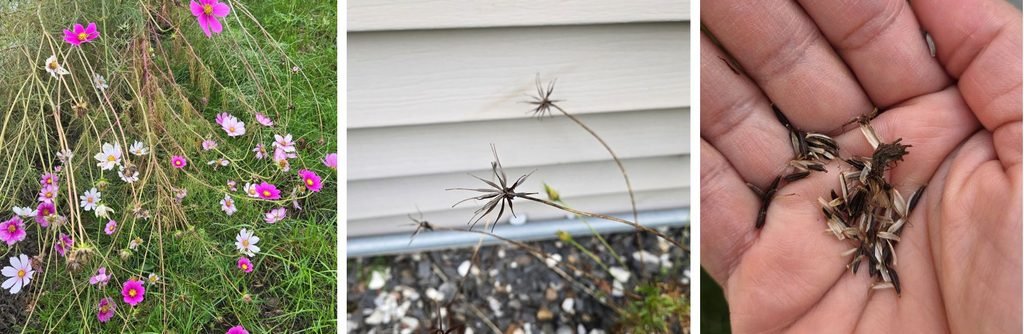
I have lots of cosmos in different areas of my yard. As I write this on October 4th, they are still blooming. Cosmos are annuals but self-seed regularly. I bought my first cosmos seeds in 2018. Eight years later I’m still getting flowers from the descendants of my original seeds! Some grow tall while others grow wide. This year I added seeds to 2 new areas of my yard and they are still blooming.
I will leave most of the flowers alone until the first frost which will kill them. I’ll cut some and put in small bud vases. I will let most of them self-seed. Some I will pull up by the root, shake out to disperse the seeds and put in the trash. I don’t compost, but if I did, these would go in the compost. For others I will pull up, collect the seeds and store those seeds in a paper bag until the spring time. In the spring is when I will pull up any dead flowers that I didn’t pull up in the fall as part of my spring clean-up.
Irises: Trim Now, Divide Every 3+ Years
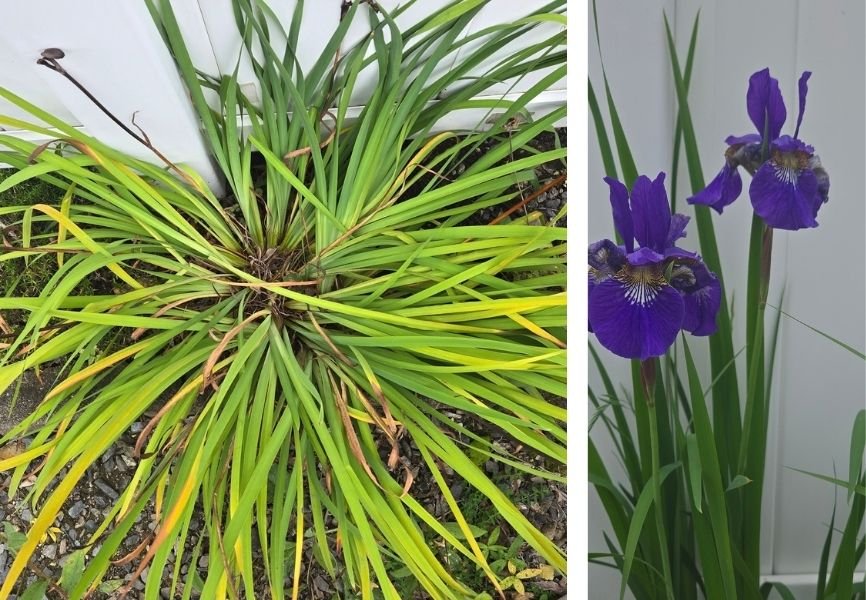
I grow two kinds of iris: Bearded and Siberian. Irises are the kind of flower that just keeps giving. You’ll only need 1 iris rhizome to have a lifetime of blooms with proper care. These propagate easily. Once they get to the point where the leaves are bunched up and form a ring you will know it’s time to separate them. See second shot below next to the Siberian iris. It’s in desperate need of dividing.
First step is to trim the leaves back leaving a few inches. Trim them so the leaves form a fan shape. See photo below. This will make it easier for you to handle and make the plants look neater.

If you are ready to divide the plants, make sure your shovel is sharp. Take a shovel to the roots and dig them up. This will take some hard work if you haven’t divided them for a few years. Don’t be afraid to use force. Once you’ve got the roots up, separate them. There are plenty of videos online on how to do this. Once you have the smaller divided plants you can replant them in other areas of your garden. When you replant, keep the rhizomes shallow, with the tops showing at or just above the soil.
I give the extras away now. I had already replanted previously divided plants and now I have more than I know what to do with. I belong to a local free perennial Facebook group, so I just post them on there and people come and take them. It works for me. You can also try selling them. I don’t because I don’t have the time. I put them out and let folks grab them. The rest I throw away.
Black-Eyed Susans: Clean Up or Leave for the Birds
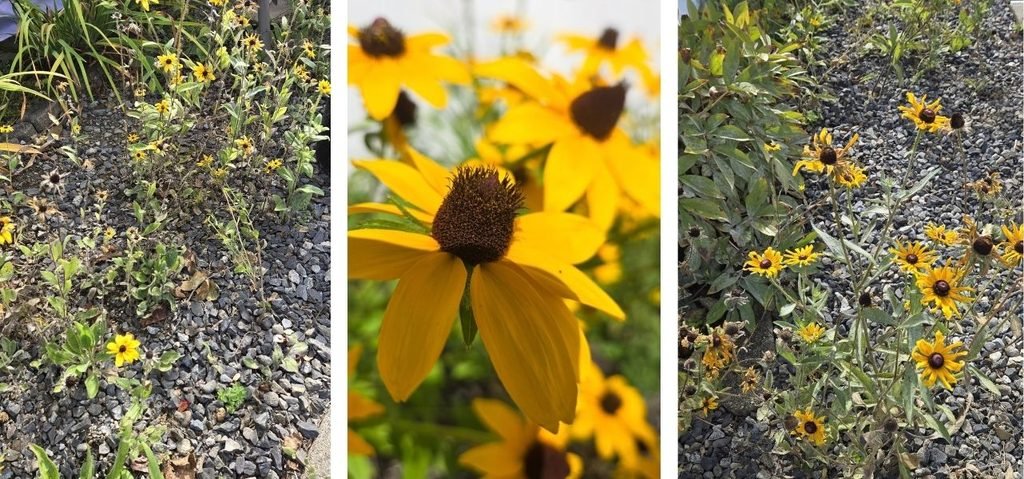
Black-Eyed Susans spread rapidly. Some will recommend you clean up while others say to leave them. Each has its advantages. Leaving them feeds the birds and keeps roots moist over winter, but can also spread disease if they have them. Cleaning them up prevents spread of disease and makes flower beds tidier. I do both. Like cosmos, you can collect seeds in the same manner. I don’t. If you see my photos, my Black-Eyed Susans have spread so much there’s no need for me to plant more seeds. They are in rock mulch around my pool and the vibrant yellow looks pretty. I’ve already pulled up a bunch in the photos below; I may pull up some more and leave the rest for the birds and bugs.
Peonies: Cut Back Foliage in Late Fall
After the flowers are spent, I leave the green foliage out for a bit. Then I trim them back completely leaving only about 3 inches. My foliage got a fungal leaf disease this summer, so I cut those back first and trashed them. Don’t compost. I left the plants for another few weeks and then trimmed them all the way back sooner than I normally would. I was nervous about the disease spreading and did not want to take any chances. This year I had many gorgeous blooms. Normally, hold off on trimming all the way back until late fall.
Peonies should also be divided. They don’t need to be divided as frequently as irises. They really only need dividing if they are overcrowded or you start to see fewer blooms. September & October are the best months to do this.

Columbine: Cut Spent Blooms to Control Seeds
So a couple years ago when I was cleaning up my garden, I accidentally spilled columbine seeds everywhere. The result? Columbine plants everywhere. So, a word of warning when cleaning up these plants. The seeds are tiny. This year I made it a point to carefully cut back the flowers after they were done blooming to avoid this issue. I kept the green foliage. I did give some plants away. I will dig up a few others to clean up the garden and throw them out or give them away. Not much else to do. I’ve found them to be pretty hardy.

Zinnias: Leave for Birds or Save the Seeds
My beautiful zinnias. Still have some blooming here as of October 4th. It’s really a personal choice as to whether or not you want to leave them or clean them up. Similar to the Black-Eyed Susans, leaving them feeds the birds, but makes your space look messy. There’s no guarantee that dropped seeds will remain if the birdies are hungry. So, if you want to guarantee it, clip some flowers for indoor vases, and save those blooms and dry them to harvest their seeds the same way I did for cosmos. You can even save the entire flower. Just make sure the flower heads are completely dry before they go in the paper bag, or they can mold. Then you’ll always have seeds for the following year.

Coneflower: Leave for Birds, Tidy in Spring
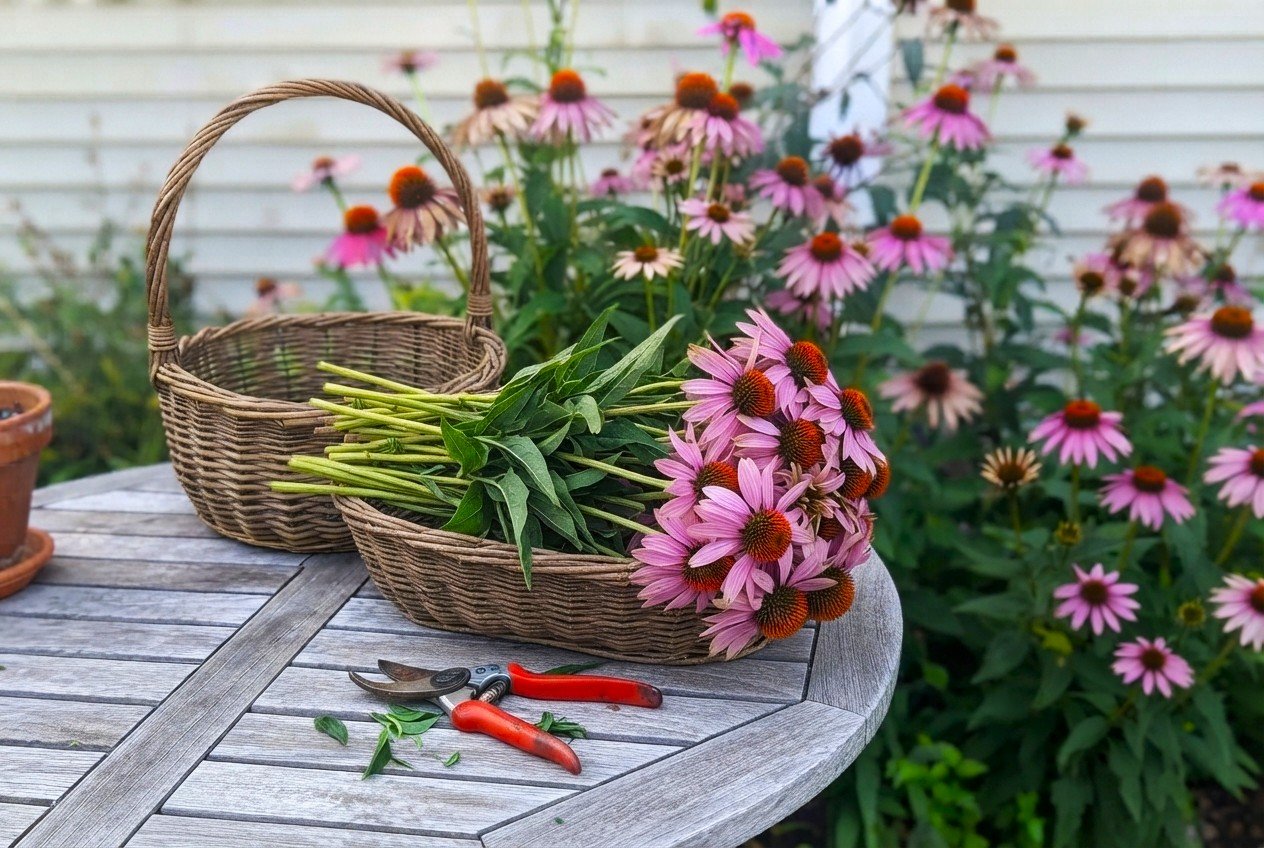
Coneflowers, specifically purple coneflower, flourish in zone 6b. I do nothing to them and they grow like crazy. They are in a certain section of the garden where they have multiplied to the point of crowding out the space. I spent an hour or two cutting them back and pulling them up. There are plenty to go around. These can be left out for the birds and also tidied up. They are also still flowering. They produced so many seeds last year I had to give them away. This year I just threw bunches of the flowers out due to the volume. I’ll leave what’s left and clean up in the spring. They can be divided, but I haven’t done that.

The Lawn: Best Time to Reseed
If your lawn is sparse, I’ll sprinkle some seed over the entire lawn. Aim to finish by mid-October. I had cleared a couple of patches of my lawn last year to try out a flower patch. Turns out I didn’t like it at all. Mowing around it was a nuisance and I didn’t get the blooms I wanted. So, I pulled up as much of the mulch as I could, and seeded and watered. This was about a month ago and it’s already grown in nicely. I’ll sprinkle some over the entire lawn for a lusher lawn next year. I also put down some milky spore to hinder Japanese beetles and their larvae (grubs). Note that in the Northeast you need to apply it for a couple of years for it to be effective. I think this is year 2 for me.

Your Fall Garden Cleanup Checklist
- Leave some for the birds: Black-Eyed Susans, zinnias and coneflowers make good winter snacks.
- Let cosmos go until frost, then save seeds or let them self-sow.
- Trim irises and peonies: Cut irises back to a few inches in a fan shape, and cut peonies to about 3 inches in late fall.
- Divide only if it’s time: Irises every 3+ years or when crowded, peonies only if overcrowded or blooming less.
- Toss diseased foliage: Bag it or trash it, and don’t compost it.
- Watch your columbine: Cut spent blooms carefully, since the seeds spill easily.
- Reseed your lawn if it’s thin, and put down milky spore if grubs are a problem.
- Clear your gutters once the leaves have fallen.
If you’d like more help caring for your perennials all year, my Perennial Planting Guide covers 30 flowers with zone-adjusted care tables and pruning diagrams.
You’ve now completed your fall cleanup.