
Heads up: this page contains affiliate links. If you buy something through my links, I may earn a small commission at no extra cost to you. I only recommend products I personally own and use.

I’ve been using my VEVOR water distiller every week since spring of 2025 — but the story of why starts almost twenty years ago, when I got sick.
After my diagnosis, I started reading. A lot. And one of the things I kept coming back to was water — specifically, what’s actually in tap water that we’re told is safe. Fluoride, chlorine, arsenic, nitrates, heavy metals. Some are added intentionally, some are byproducts of aging infrastructure, and some are just there and accepted as within “allowable limits.” Once I understood what those limits actually meant, clean water stopped being an afterthought. It became something I actively manage.
For years, my answer was a reverse osmosis system — the real deal, plumbed under the sink with a dedicated faucet and a large holding tank. It was excellent. It also stayed behind when I moved, because it was built into the condo.
When I got to this house, I fully intended to set up the same thing. Except my new kitchen has a garbage disposal, and the under-sink space that a traditional R.O. tank needs simply doesn’t exist. So I started researching countertop R.O. systems — and found them either too bulky, too expensive upfront, or both, with the added joy of ongoing filter replacement costs locked in forever.
That’s when I landed on a countertop water distiller. I’ve been running mine every week since spring of 2025, and it’s become one of those quiet, unglamorous purchases that completely changed my daily routine.
Heads up: The links on this page are affiliate links through VEVOR’s program. I bought this distiller myself — I only share things I actually own and use.
Why Distilled Water (And Why Not Filtered)
There’s a difference between filtered water and distilled water that most people don’t think about. Filters catch some things — but distillation actually boils the water, collects the steam, and condenses it back into water. What you’re left with is as pure as water gets. Chlorine, fluoride, heavy metals, dissolved solids — gone.
For me, the calculation was simple: an R.O. system runs $200–$500+ installed, plus filter replacements. A countertop distiller costs a fraction of that, has no filters to replace (just carbon packs that come with it), and does the same fundamental job. If you live alone, it’s even more practical. You’re not trying to supply a household — a 4-liter batch runs while you work, clean, or putter around the garden, and by the time you come back you’ve got clean water waiting.
How I Actually Use It
I run mine 3–4 times a week. It takes a few hours per batch, so I set it going while I’m busy with something else — it just hums in the background. I’ve never once felt like it was getting in my way.
What I use distilled water for:
- Drinking — this is the main one, obviously
- My diffuser — no mineral buildup, it lasts so much longer
- Neti pot — this one is non-negotiable; tap water in a neti pot is genuinely risky
- Steam iron — no more white residue on clothes
- Espresso machine — note on this below
The only thing I want to flag upfront: if you use distilled water in an espresso machine, you’ll need to add a mineral supplement. Distilled water is so pure it’s actually slightly corrosive to espresso boilers over time — it pulls minerals from the metal. A small mineral packet (cheap, easy to find) solves it. Worth knowing before you assume distilled = perfect for every appliance.
The Options — Which One Is Right for You
I personally use the glass carafe version and love it. But VEVOR makes a few variations, and the right one depends on you.
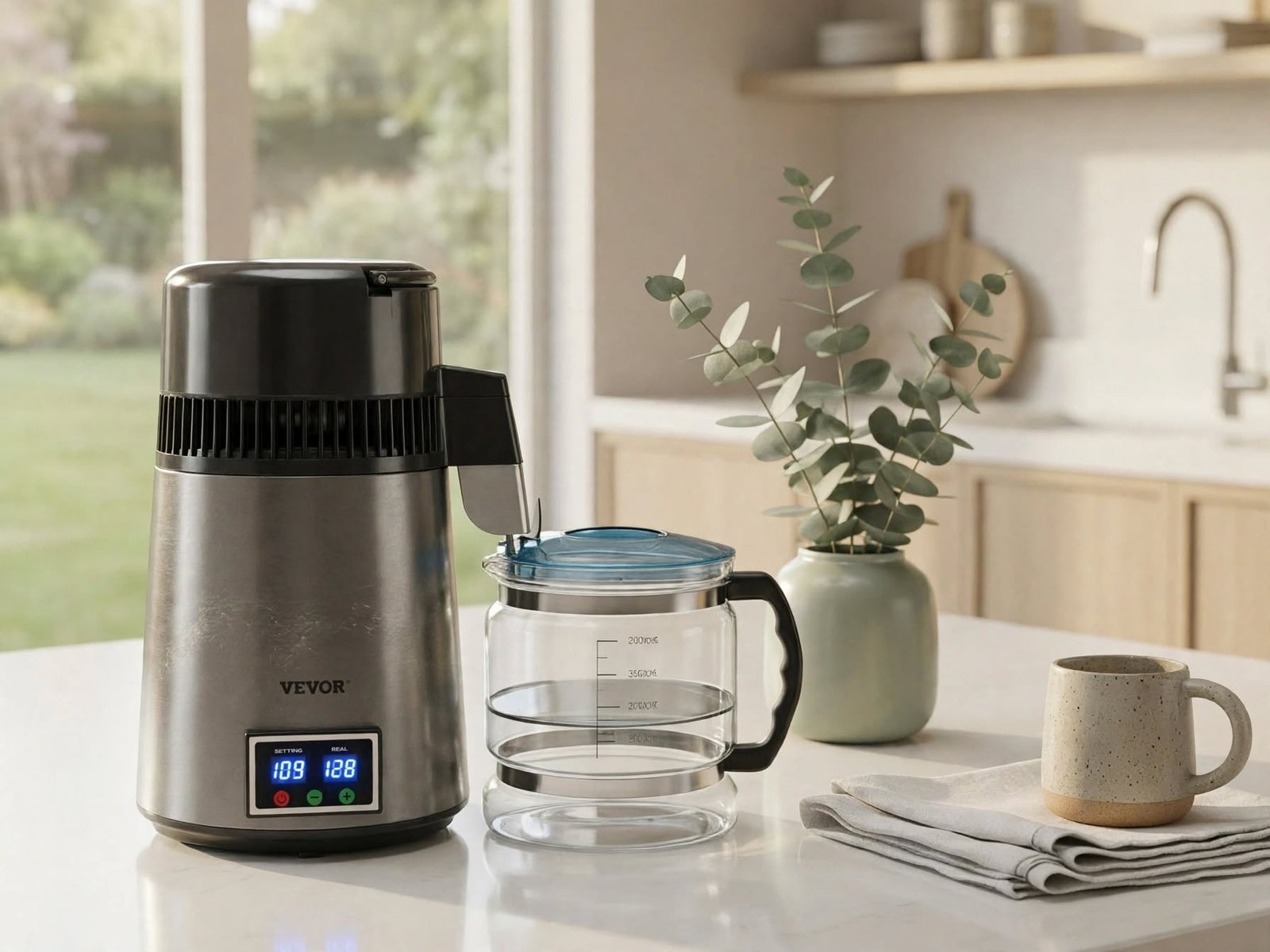
My pick: VEVOR Water Distiller with Glass Carafe (1.1 gal)
This is the one on my counter. The glass carafe is important to me — distilled water stored in plastic can pick up off-flavors, and I like that the glass keeps it clean and pure. The stainless steel interior means no plastic ever touches the water during distillation either. 750W, runs a batch in a few hours, comes with cleaning powder and 3 carbon filter packs.
Lighter Option: VEVOR Water Distiller with Plastic Carafe (1.1 gal)
Same machine, plastic carafe. If a full glass carafe feels too heavy to pour comfortably, this is the practical choice. The distillation process itself is identical — you’re just storing the result in plastic rather than glass. For some people that tradeoff is worth it.
Higher Output: VEVOR Water Distiller, Larger Capacity (1.6 gal)
If you use a lot of distilled water — multiple appliances, you’re buying for two people, or you just hate running batches frequently — the larger model makes more sense. Same quality, bigger yield per run.
What to Know Before You Buy
A few honest things I wish someone had told me:
It takes time. A full batch is a few hours. This is not an instant-water situation. I actually think it’s a non-issue if you build it into your routine — start it, walk away, come back — but if you were expecting something fast, adjust your expectations.
Run it through the carbon pack. The distiller comes with carbon filter packs that attach at the outlet. Use them. They make a noticeable difference in taste. Distilled water on its own can taste a little flat — the carbon pack rounds it out.
It needs cleaning. Limescale builds up in the tank. Skip the included cleaning powder and get citric acid instead. A bag lasts a long time and it’s much more effective. Add some to the distiller with water, let it boil for about 15 minutes, wipe it down, rinse, and it’s good as new. Leaving a little water in the bottom after each run helps minimize buildup. I clean mine regularly and it’s quick and easy.
Glass carafe = heavier. Full, a glass carafe has some weight to it. If that’s a concern, go with the plastic version without guilt.
Bottom Line
I’ve had this distiller since spring of 2025 and I can’t imagine not having it. It’s one of those purchases that quietly earns its place — it just runs, I just use it, and I know exactly what I’m drinking. For one person, the output is plenty. There are no expensive filters to replace, no installation, no plumber. You plug it in, fill it up, walk away.
If you’re done with tap water and not ready to commit to a full R.O. system, this is the move.
Looking for more of my personal picks? Browse my full resources page.